


 简体中文
简体中文 English
 русский
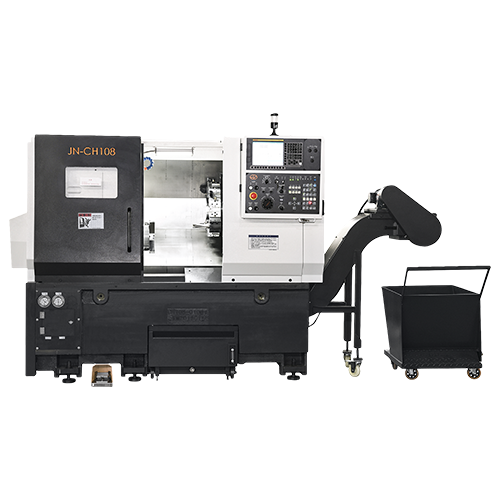
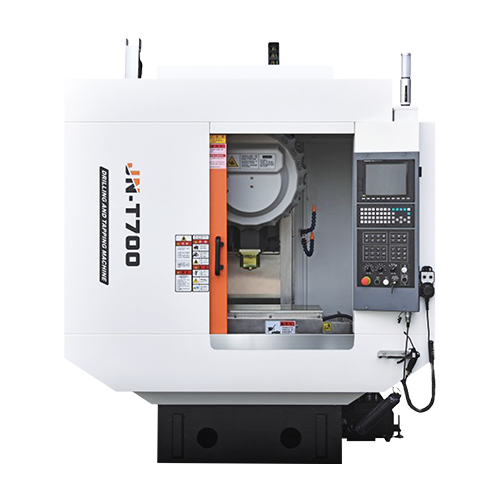


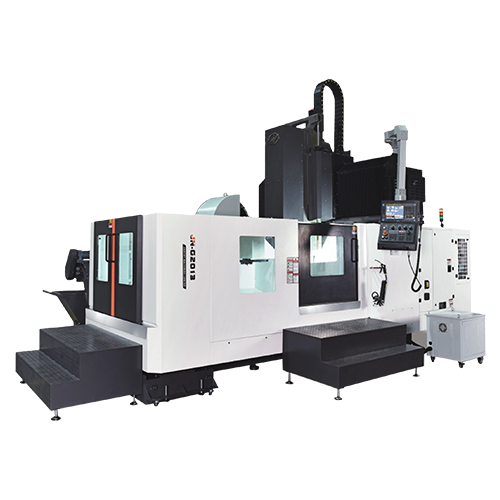
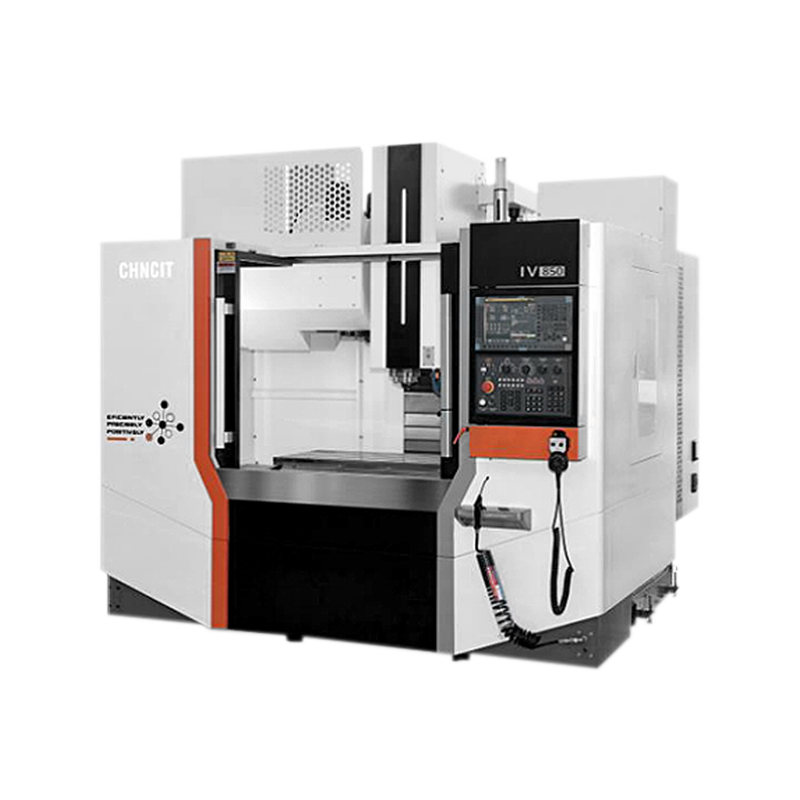
Machining flexibility for various operations like milling, drilling, and tapping;
High precision and efficiency;
Three system choices: Fanuc, mitsubishi, and siemens 828d, with standard original motors;
Belt or Direct type options available for specific product machining requirements.
VIEW MORE 

-
 WHATSAPP
 -
 INS
INS -
 WECHAT
How To Maintain Rails On A Heavy Gantry Mill
Author: CHNCIT
Date: Apr 24, 2026
Rail maintenance directly determines the productive life of large-format milling equipment. A CNC Gantry Machine operating under heavy loads subjects its guide rails to extreme stresses – high point loads, abrasive chips, and continuous reciprocating motion. Similarly, a CNC Gantry Machining Center used for mining equipment or wind turbine components demands even more rigorous rail care. Many users, however, follow the same lubrication schedule as smaller machines, leading to premature wear. Jiangnan CNC Machine Tool Co., Ltd. has collected maintenance practices from high-mileage installations. Here is the practical answer to how to maintain rails on a heavy gantry mill effectively.
Why heavy gantry rails fail faster than standard machines
Higher point loading: Each truck on a heavy-duty CNC Gantry Machine carries 3,000–8,000 kg. Under these loads, lubricant film thickness becomes critical.
Longer travel distances: Gantries often stroke 4–10 meters. A single day’s production can accumulate 20 km of rail travel.
Contamination severity: Large cast iron or steel workpieces shed heavy chips that wedge between wipers and rails.
Uneven wear patterns: Most heavy cutting occurs in the central zone, creating localized rail indentation.
A user operating a refurbished gantry wrote, “After one year, the Z-axis rail showed visible grooves. The previous owner never replaced the rail wipers, and fine grinding dust entered the lubrication system.”
Daily and weekly inspection routines
Every shift (operator responsibility)
Visually inspect rail surfaces for scoring, discoloration, or embedded chips
Check automatic lubricator oil level and cycle counter (should pulse every 15–30 minutes)
Listen for grinding or squeaking during axis movement – this indicates lubrication failure
Wipe external rail sections with clean cloth before moving the gantry to end positions
One experienced operator shared, “I run my hand lightly along the rail with a clean glove. Any rough spot means a chip has embedded under the wiper. Remove it immediately before it scratches the entire rail length.”
Weekly (maintenance technician)
Measure lubricant output at each metering unit (target 0.05–0.1 ml per pulse per point)
Clean and inspect wipers for tears or hardening (replace every 6 months in heavy use)
Verify rail parallelism using a laser or precision level – deviation under load should not exceed 0.02 mm per meter
Proper lubrication practices for heavy duty
Many users ask, “How much grease or oil is enough?” The answer depends on load, speed, and duty cycle.
For oil lubrication (preferred for heavy gantries)
Use ISO VG 150–220 oil with extreme pressure (EP) additives
Set lubrication frequency: every 20 minutes of axis motion, not by time
Each lubrication point receives 0.1–0.3 ml per cycle
Critical rule: After lubricator replacement, manually prime all lines. Air pockets starve rails for first 100 cycles.
For grease lubrication (simpler but less effective under heavy loads)
Use NLGI 00 or 0 grade (semi-fluid) grease with EP additives
Relubricate every 2–4 operating hours for heavy cutting
Pump until fresh grease appears at seal lips – do not rely on volume counters
Grease has a downside: excess grease traps chips, forming lapping paste that accelerates wear
A heavy equipment manufacturer switched from grease to oil on their CNC Gantry Machining Center. Rail wear dropped 60% over two years, and axis travel became noticeably smoother. The initial investment in an automatic oil lubrication system paid back in 8 months through reduced rail replacement costs.
Rail protection from chips and coolant
Effective strategies from shop floors
Install telescopic steel covers on all exposed rails (bellows are too weak for heavy chip loads)
Add air knife systems that blow chips away before wipers contact them
Position coolant nozzles so that chips flow away from rail ways, not toward them
For CNC Gantry Machine with horizontal ways, use magnetic separators on coolant tanks to remove ferrous fines
One user explained, “We added simple rubber skirts hanging from the crossbeam ends. They drag on the table surface, pushing chips outward before the rail wipers ever see them. Rail wear stopped completely.”
Signs that rail replacement or reconditioning is needed
Indicator: Play or looseness when pushing/pulling the axis with a dial indicator (more than 0.02 mm movement)
Visual: Flaking, spalling, or deep scratches (deeper than 0.1 mm) on raceways
Performance: Inability to hold tolerance in the center of travel while ends are accurate
Noise: Low-frequency growl during axis motion, not present at ends of travel
Step-by-step rail recovery process
Measure rail wear profile using a straightedge and feeler gauges every 300 mm
If wear under 0.05 mm: Re-shim the trucks to restore preload
If wear 0.05–0.2 mm: Professional rail grinding in place (possible on most heavy gantries)
If wear over 0.2 mm: Rail replacement is more economical than grinding
Jiangnan CNC Machine Tool Co., Ltd. recommends a proactive rail maintenance calendar:
Daily: Visual and audible checks
Weekly: Lubricator verification and wiper cleaning
Monthly: Rail cleanliness audit and metering unit flow test
Quarterly: Parallelism and straightness check with laser
Annually: Full rail wear profile documentation
A mining equipment shop followed this calendar for 5 years on their CNC Gantry Machining Center. Original rails remained within 0.03 mm wear after 35,000 operating hours. The neighboring shop, without this regimen, replaced rails twice in the same period. Consistent rail maintenance pays for itself many times over.


Copyright © Jiangnan CNC Machine Tool Co., Ltd.
