


 简体中文
简体中文 English
 русский
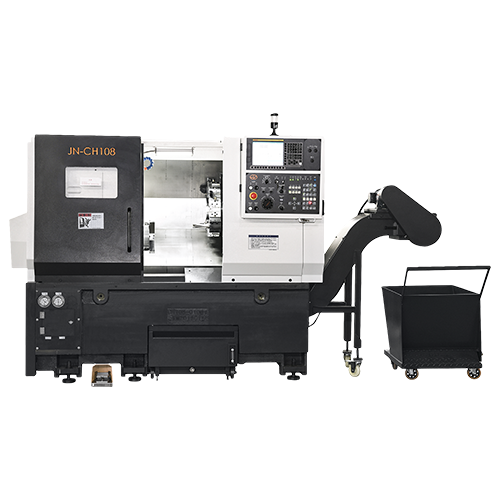
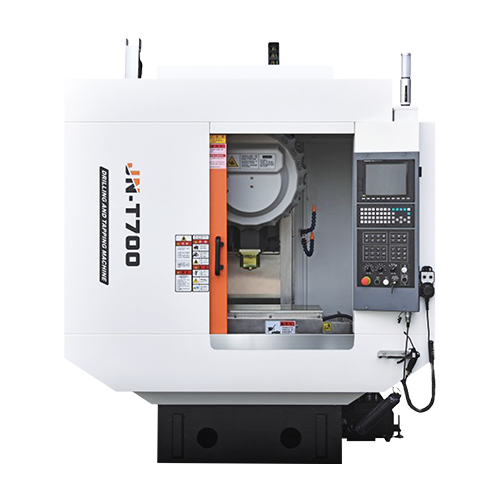
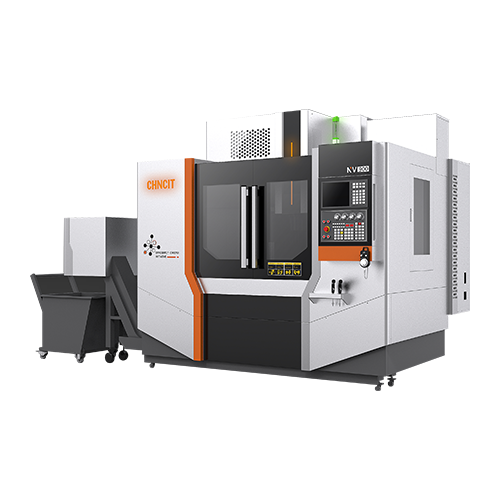
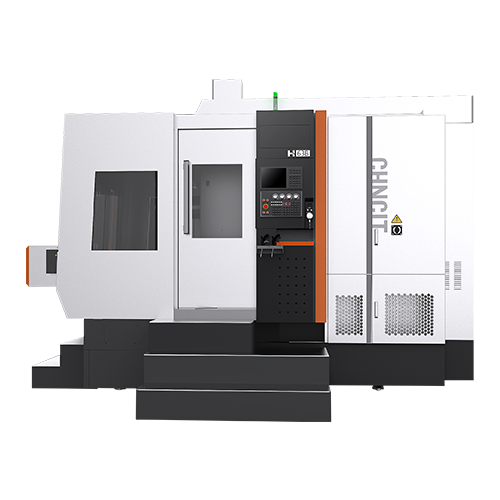
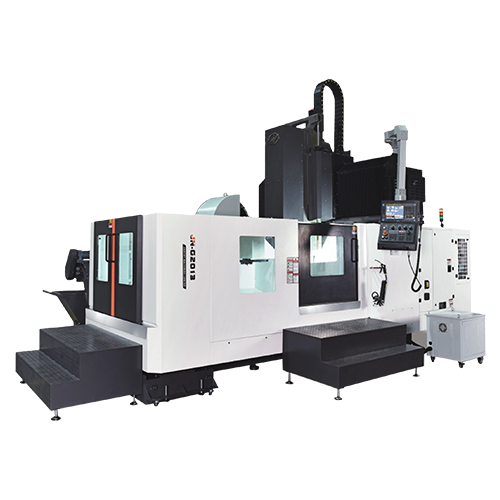
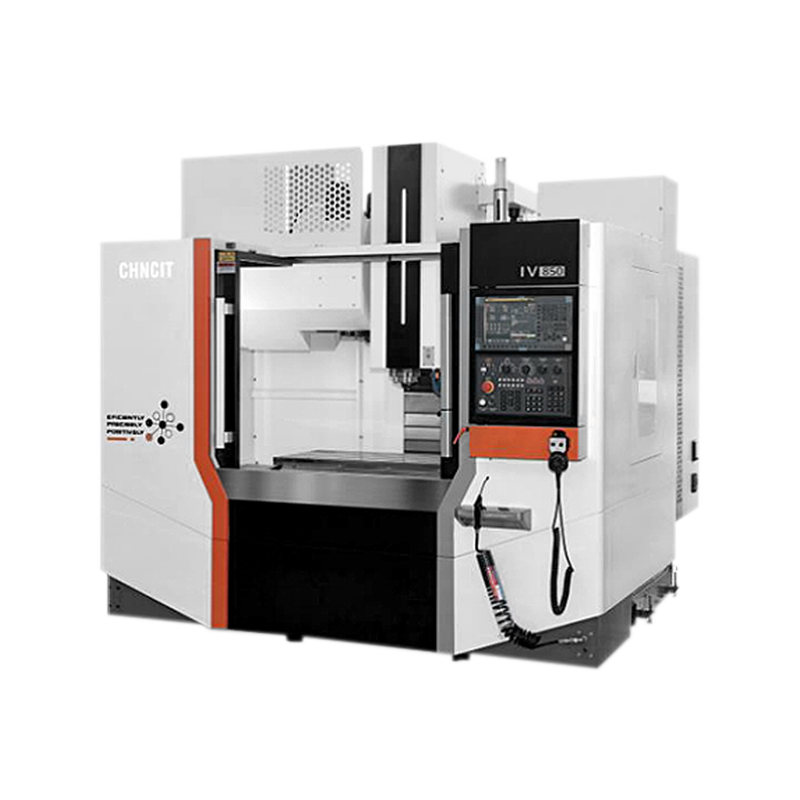
Machining flexibility for various operations like milling, drilling, and tapping;
High precision and efficiency;
Three system choices: Fanuc, mitsubishi, and siemens 828d, with standard original motors;
Belt or Direct type options available for specific product machining requirements.
VIEW MORE 

-
 WHATSAPP
 -
 INS
INS -
 WECHAT
Can A Gantry Center Handle Roughing And Finishing
Author: CHNCIT
Date: May 01, 2026
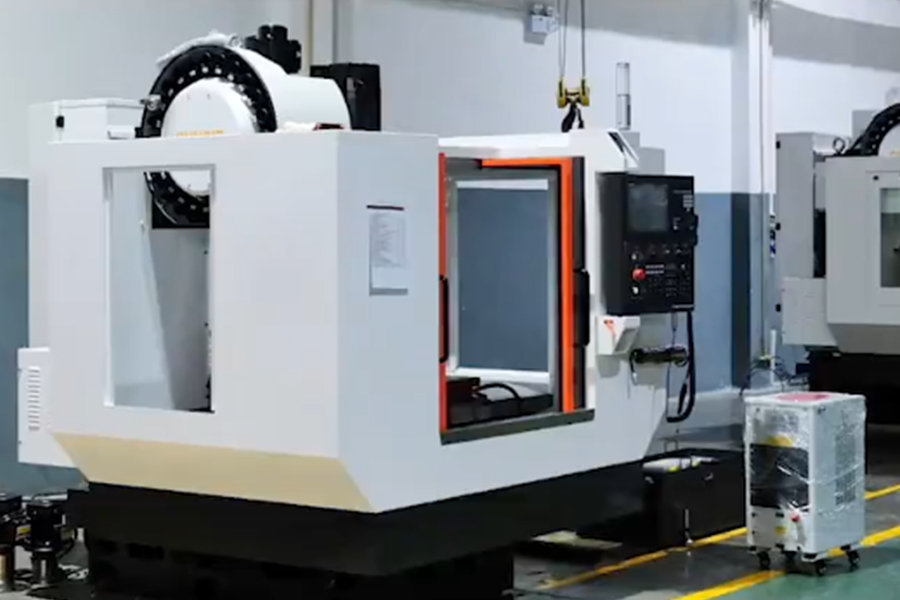
Manufacturing engineers constantly seek single-setup solutions to reduce fixturing errors and cycle times. A CNC Gantry Machining Center occupies a large footprint, so users naturally ask whether it can replace both a heavy roughing mill and a precision finishing machine. Similarly, a CNC Gantry Machine used for large structural parts often faces the challenge of transitioning from aggressive material removal to fine surface finishing. Jiangnan CNC Machine Tool Co., Ltd. has tested this dual-role capability across dozens of real production environments. The question deserves a detailed answer: Can a gantry center handle roughing and finishing in one setup without compromise?
The mechanical requirements for dual-role capability
For a single machine to perform both operations successfully, three characteristics must coexist:
1. Spindle that delivers both high torque and high speed
Roughing demands torque (150–300 Nm at 500–1,500 rpm). Finishing demands speed (8,000–15,000 rpm) and low runout (<0.003 mm). Traditional spindles excel at one but not both. Modern dual-winding or two-speed gearbox spindles solve this:
Low range (geared): 150–2,000 rpm, 250 Nm continuous – for roughing
High range (direct): 2,000–12,000 rpm, 60 Nm – for finishing
A user operating a CNC Gantry Machine for wind turbine hubs reported, “We rough with a 100 mm face mill at 800 rpm, then finish with a 20 mm ball end mill at 10,000 rpm. The two-speed spindle makes this possible without a tool change to another machine.”
2. Structural stiffness that resists roughing forces but allows finishing precision
This is the hardest contradiction. High cutting forces during roughing require massive, rigid structures. But heavy structures store thermal energy and vibrate at low frequencies, which can harm finishing quality. Solutions include:
Hydrostatic guideways – they offer high damping during roughing (reduces chatter) and near-zero friction during finishing (improves surface finish)
Dual-feedback control – linear scales for finishing precision, motor encoders for roughing stability
Active thermal management – chilled castings and symmetric design prevent roughing heat from distorting finishing geometry
3. Control system with adaptive strategies
Modern CNCs can switch between roughing and finishing modes automatically:
Roughing mode: Higher following error allowed, aggressive acceleration, chip-breaking cycles
Finishing mode: Tight following error (0.002 mm), smooth acceleration profiles, advanced look-ahead for corner rounding
Real-world case studies from users
Case 1 – Large mold base (steel, 2m × 1.5m)
A tool and die shop initially rough-molded on a heavy planer and finished on a separate CNC Gantry Machining Center. Setup time between machines took 3 hours, and reference errors caused 0.1 mm mismatches. After switching to a single dual-role gantry center:
Roughing pass: 50 mm face mill, 4 mm depth, 1,000 rpm, 500 mm/min (torque 180 Nm)
Finishing pass: 12 mm ball mill, 0.3 mm stepover, 8,000 rpm, 1,500 mm/min
Result: Total time dropped 28%, and alignment errors vanished.
Case 2 – Aerospace longeron (aluminum 7075, 3m length)
The challenge here was thin-wall deflection. Roughing removed 80% of material quickly, but finishing required light cuts to avoid chatter. The operator programmed:
Roughing: Trochoidal tool paths with 15 mm end mill, 10 mm radial engagement, high feed (2,000 mm/min)
Finishing: 0.2 mm radial engagement, 12,000 rpm, helical interpolation
The same CNC Gantry Machine completed both in 2.5 hours. Previously, roughing on a high-torque mill and finishing on a separate router took 4 hours plus transfer time.
Limitations and when dual-role is not ideal
Users also ask about situations where a single gantry center cannot replace two machines:
Limitation 1 – Extremely high metal removal rates
If roughing requires 500 cm³/min or more (e.g., massive Inconel forgings), a dedicated heavy roughing machine with 75+ kW spindle and box ways is still superior. The CNC Gantry Machining Center designed for dual roles typically tops out at 200–300 cm³/min roughing capacity.
Limitation 2 – Sub-micron finishing requirements
For optical molds or precision bearings requiring Ra <0.1 µm, a separate finishing machine with air-bearing spindles and vibration-isolated foundations remains necessary. Dual-role gantries achieve Ra 0.2–0.4 µm, which suffices for 95% of industrial parts.
Limitation 3 – Very long cycle times that heat the machine
A 20-hour roughing pass heats the entire structure. Even with cooling, the finishing pass 30 minutes later may see thermal drift. One solution: rough one part, let machine idle for 1 hour, then finish. But this reduces utilization.
Practical recommendations from Jiangnan CNC Machine Tool Co., Ltd.
Choose a dual-role gantry center when:
Part size exceeds 1 meter in any dimension
You currently lose 2+ hours per part in transfer setups
Roughing removal rate stays under 250 cm³/min
Required finishing tolerance is ±0.01 mm or looser
Avoid dual-role when:
Roughing removal exceeds 400 cm³/min regularly
Finishing requires ±0.002 mm or better
Parts are small enough that two dedicated machines fit your floor
Operational tips for success
Use separate tool assemblies: Dedicate roughing holders and finishing holders; never mix.
Program a “stabilization dwell”: After roughing, let the CNC Gantry Machine idle for 3–5 minutes with spindle coolant running to stabilize temperature.
Measure in-process: Use a spindle-mounted probe after roughing to verify stock remaining before finishing.
Clean aggressively: Chips from roughing will ruin the finishing surface. Install high-flow coolant and chip augers.
A heavy equipment manufacturer followed these tips on their CNC Gantry Machining Center. They now produce 80% of their large parts in one setup. Roughing takes 70% of cycle time, finishing 30%, but the elimination of a second machine and refixturing errors increased overall throughput by 40%. For many shops, a well-designed dual-role gantry center is not just an option – it is the most profitable solution.

Copyright © Jiangnan CNC Machine Tool Co., Ltd.
